The prepared environment
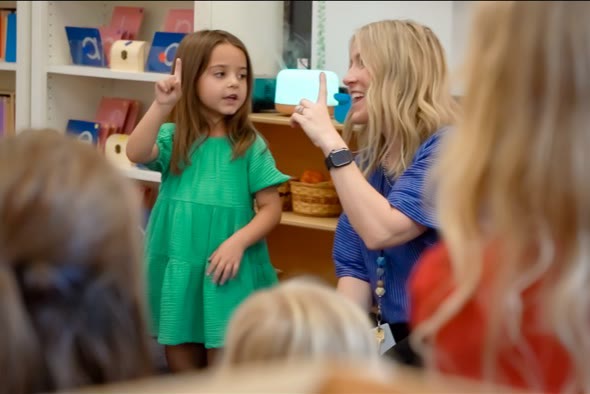
The classroom is designed for independence. Materials sit on open, child-height shelves, accessible, beautiful, and suited to where each child is developmentally. The room itself does much of the teaching.
A hands-on early childhood program where young learners build independence, curiosity, social confidence, and a love for school.
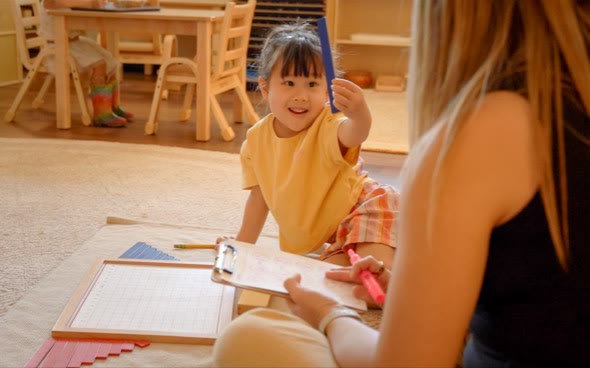
A way of teaching built on a simple observation: children learn best when they are trusted to do real work, at their own pace, in a space prepared for them. We do not move children through a curriculum. We follow the child.
Maria Montessori, a physician, started by watching, not by deciding ahead of time what children should be.
What she saw was that children have a deep drive to become capable. Given the right materials and enough freedom, they choose challenging work, repeat it until they master it, and grow more independent because of it. Montessori education is the environment built around that drive, one that respects a child's dignity at every age and gives help only when help is actually needed.
These are not add-ons or a special week. They are how every classroom runs, every day, from the toddler room upward.
The classroom is designed for independence. Materials sit on open, child-height shelves, accessible, beautiful, and suited to where each child is developmentally. The room itself does much of the teaching.
Work is tailored to each child's interests, needs, and pace. Within the prepared environment, children choose their activities, which is exactly what makes them invested in the learning that follows.
Children meet abstract ideas through real materials they can hold. A concept is understood with the hands first, number, language, geography, science, long before it lives only on paper.
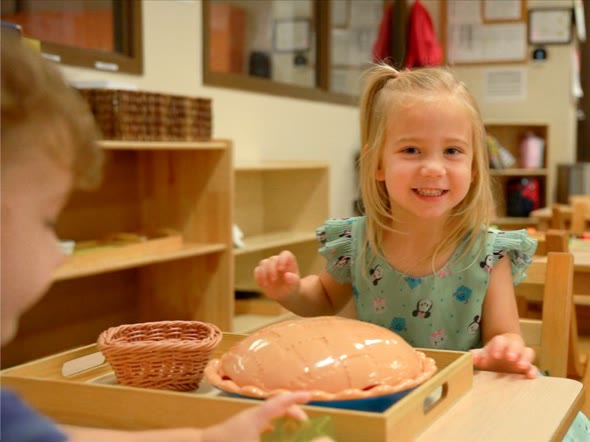
Children are encouraged to do things for themselves. That builds self-reliance, problem-solving, and confidence, and it is why a four-year-old in a Montessori room can pour, clean up, and care for the space.
Classrooms group several ages together. Older children practice leadership by teaching younger ones and reinforce their own knowledge doing it. Younger children have a model to aspire to. Competition drops; collaboration rises.
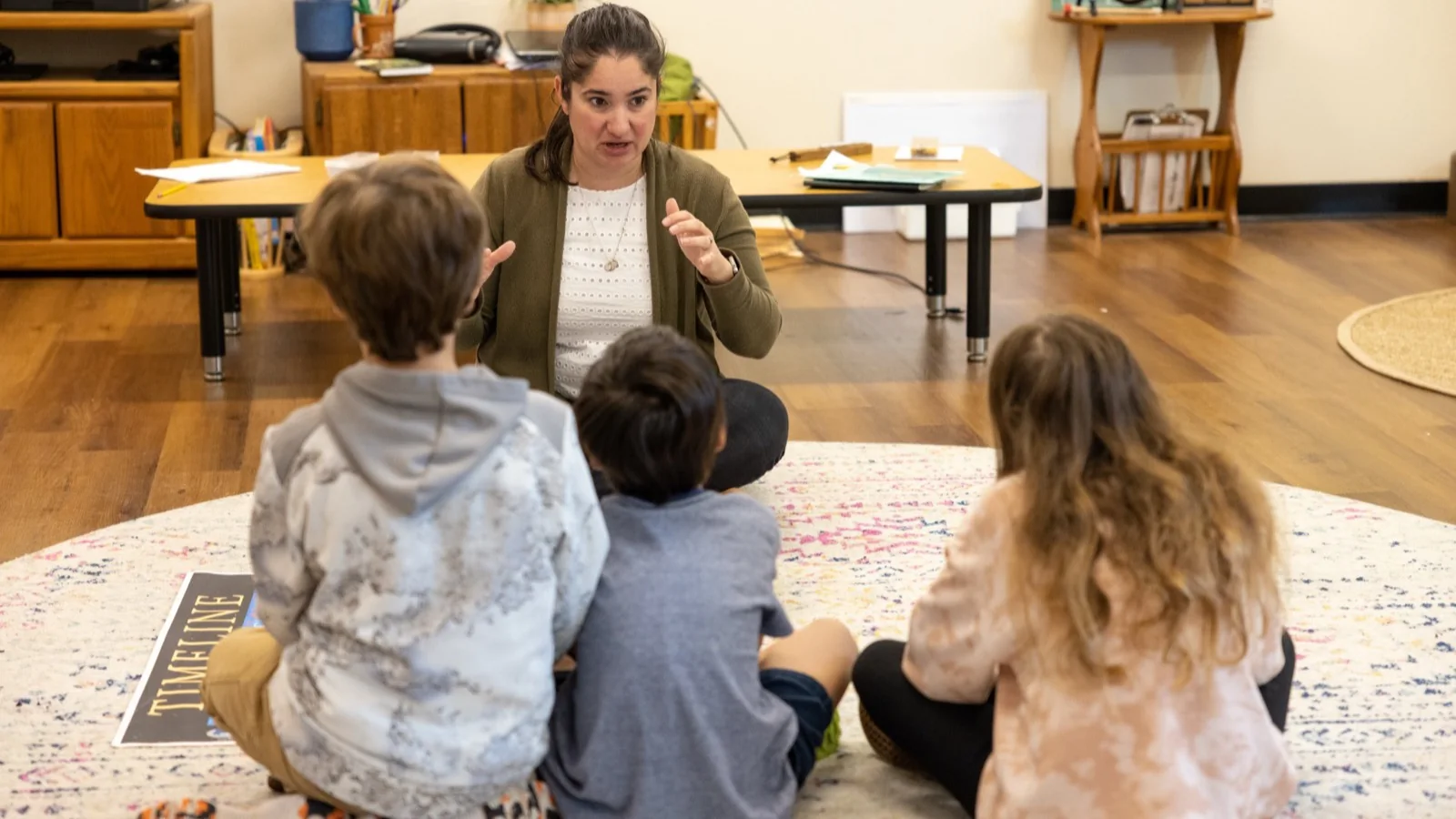
The teacher is a trained guide who observes closely, prepares the environment, and steps in with the right lesson at the right moment, then steps back so the child can do the work.
Montessori grows with the child. Dr. Montessori described childhood in distinct stages she called the planes of development. Each plane has its own needs, so each classroom, and each trained guide, is built to match. At San Tan, those planes run as one continuous Montessori ladder.
The youngest years, when children take in the world almost effortlessly. Practical life and sensory work build coordination, language, order, and independence. This is where the love of focused work is formed.
Toddler · PrimaryElementary children become big-picture thinkers, hungry for the why, for fairness, for how everything connects. Lessons open onto the whole universe and then follow the child's questions into deep, self-directed study.
Lower & Upper ElementaryAdolescents need real, purposeful work in a real community. Montessori's Erdkinder, or children of the land, gives teens meaningful responsibility: running a small business, working the land, and contributing to a society they can see.
Adolescent MontessoriMontessori is often thought of as a preschool thing, a few good early years, then on to a conventional school. But the method was designed to carry all the way through adolescence, and that is how San Tan runs it.
A child can move through one continuous Montessori environment from the toddler room to 12th grade, the same principles deepening at each plane: more independence, more responsibility, more real engagement with the world. A public charter running authentic Montessori through high school is rare in Arizona.
The garden beds, the student-run coffee cart, the overnight field studies in the adolescent program, these are not enrichment bolted onto a normal school day. In Montessori, this is the curriculum.
The real question is not what is Montessori. It is what could your child become in one.
The best way to understand a Montessori classroom is to stand in one. Schedule a tour and watch the work cycle for yourself.
Schedule a Tour San Tan Montessori · Follow the childAnswer a few quick questions and get a practical campus and schedule starting point before you book a tour.
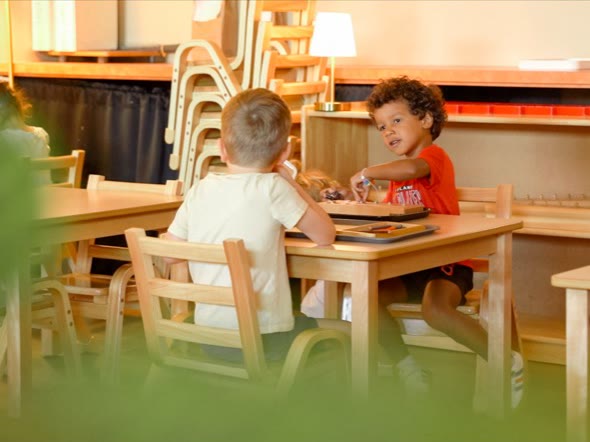
Children learn through purposeful materials, practical life work, sensory exploration, language, math, movement, and peer interaction. Teachers guide each child with structure, care, and room to grow.
See the next stepChildren practice choosing work, finishing routines, and caring for their classroom.
Hands-on materials make abstract ideas visible, touchable, and memorable.
Mixed moments of individual and group work help children practice friendship skills.
Clear expectations and caring guidance support confident, responsible choices.
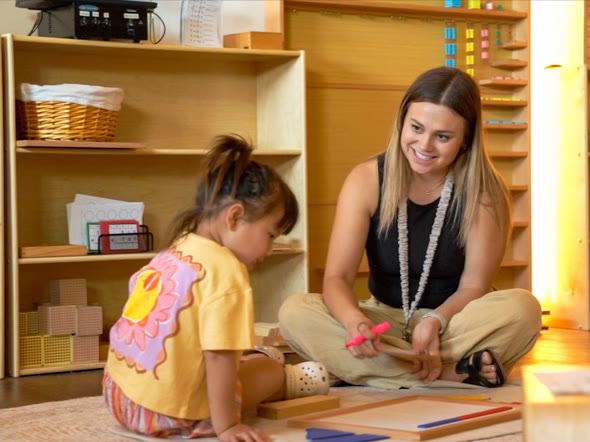
Children enter the room, greet their teacher, and ease into the day.
Students choose guided materials that build focus, language, math, and motor skills.
Movement, music, stories, and social play round out the classroom experience.
Choose the rhythm that fits your child and your week.
Expanded classroom time for families who want a fuller preschool routine.
A focused morning or partial-day preschool experience.
Three, four, and five day options help families plan with confidence.
Tour the campus that fits your family best and meet the classroom team in person.
Preschool-12th Grade
3959 E Elliot Rd, Gilbert, AZ 85234 Call (480) 306-6269 Tour this campus Gilbert preschool details Google Business Profile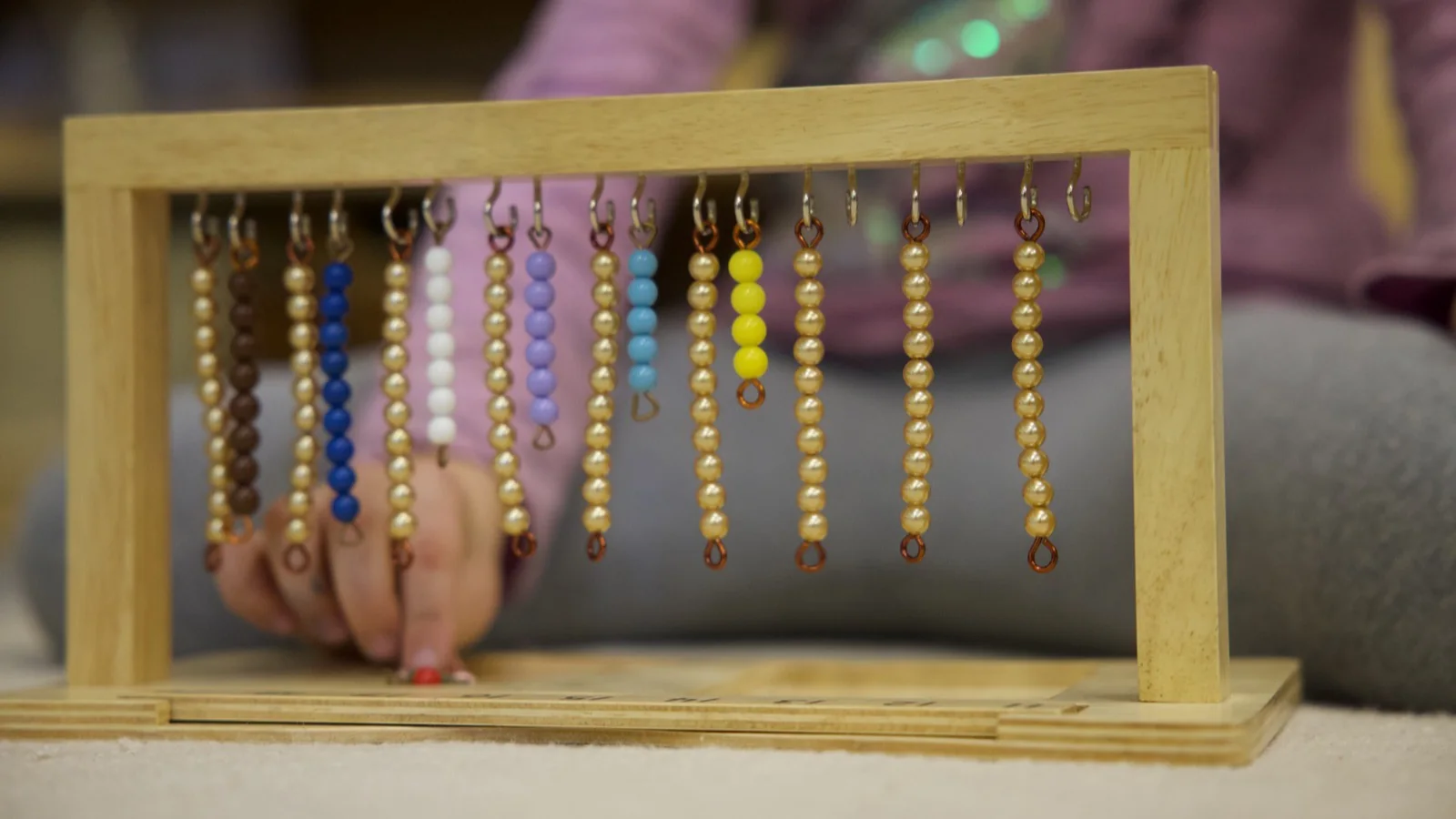
Preschool-8th Grade
18979 Signal Butte Rd, Queen Creek, AZ 85142 Call (480) 306-6327 Tour this campus Queen Creek preschool details Google Business ProfileAsk about schedule availability, campus fit, and what to expect before visiting the classroom.
Open current preschool handbooks, calendars, and campus forms.
The best way to know whether a preschool is the right fit is to walk the room, meet the teachers, and see how your child responds to the environment.
San Tan Preschool Team
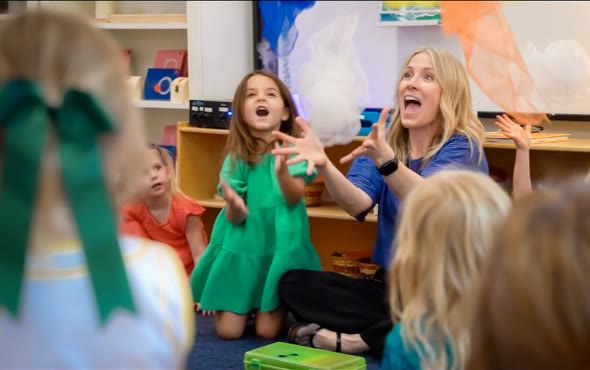
Tour San Tan Montessori Preschool, ask about current schedule openings, and leave with a clear next step.
These notices apply to the preschool tour and contact forms on this site. Official enrollment, records, and student services are handled through San Tan Charter School's designated school processes.
Effective date: June 9, 2026
How preschool inquiry information is collected, used, limited, and corrected.
Read notice Children's PrivacyChildren under 13 should not submit personal information through these forms.
Read notice Terms of UseGeneral site terms for program information, inquiries, and family communications.
Read terms Student RecordsPublic forms are not a student-record, health-record, or secure document portal.
Read notice AccessibilityHow families can request help or an alternate way to receive site information.
Read notice NondiscriminationSan Tan Charter School's equal access statement for programs and communications.
Read notice